Feline Urologic Syndrome (FUS)
Feline idiopathic cystitis (FIC), also called feline idiopathic lower urinary tract disease (FiLUTD) or feline urologic syndrome (FUS), is a very common cause of lower urinary tract symptoms (e.g. blood in the urine, straining to urinate, increased frequency of urination) in cats.
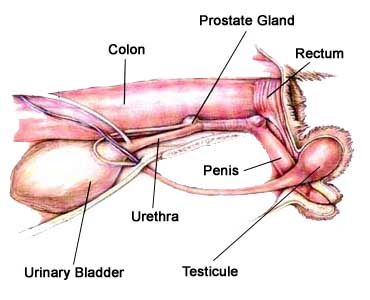
Normal Male Cat Urinary System
FIC is characterized by a group of symptoms which can appear individually or in combination. Four of the most common symptoms include cystitis (inflammation of the lining of the urinary bladder), lower urinary tract infection, blockage (debris and crystals forming a plug that obstructs the urethra of male cats), and uremia (accumulation of poisonous wastes in the cat’s bloodstream).
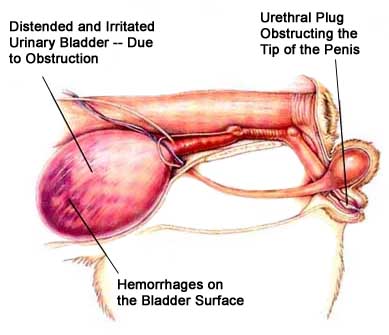
Male Cat with Symptoms of Feline Urologic Syndrome
FIC affects male and female cats of all ages. Both male and female cats can develop sand-like crystals and stones. These crystals and/or stones may form a plug that obstructs the urethra of male cats. This plug or obstruction is a medical emergency as urine cannot pass from the bladder through the urethra to the exterior. If the cat is unable to urinate, toxins accumulate in the bloodstream causing uremia—a deadly condition. Female cats rarely develop urinary tract obstruction due to their shorter and wider urethra.
Several factors have been identified as playing key roles in the development of FIC. Some of these factors include viruses, food, stress, lack of exercise and genetics.
Regardless of the cause, there are common symptoms associated with FIC. These symptoms include:
- Hematuria - blood in the urine
- Pollakiuria - increased frequency of urination
- Dysuria - straining to urinate
- Urinating outside the litterbox
- Distressed sounds while urinating
- Increased grooming of the genital area
Male cats sometimes develop urinary obstruction and should be seen by a veterinarian immediately. This is a major medical emergency. Urinary obstructions that last longer than 24-48 hours is life threatening. The initial symptoms are often mistaken for constipation. Eventually, these cats become lethargic, loose their appetite, and make frequent and painful attempts to urinate.
Veterinary evaluation of a cat with symptoms of FIC include a thorough physical examination, abdominal palpation (feeling for an enlarged bladder), and medical history. The medical history includes questions regarding food, eating and drinking habits, as well as the personality and disposition of the cat.
Specific tests may be necessary in order to diagnose FIC and other urinary tract conditions. A urinalysis is routinely performed. Along with a routine urinalysis, urine bacterial culture and sensitivity may be recommended. Abdominal X-rays and / or abdominal ultrasound may be needed to evaluate for stones (calculi) and/or tumors. Complete blood count and serum biochemistry tests are needed to evaluate the cat’s general health, particularly if urinary obstruction is present and uremia is suspected.
The treatment for FIC is somewhat complex. Depending upon the cat’s physical condition, hospitalization may be necessary. Fluid therapy is important for dehydrated animals. The fluid also causes production of dilute urine, aiding the elimination of inflammatory debris and crystals. Antibiotics are generally administered, even though there is no evidence that FIC is a bacterial disease. Additional medications - tranquilizers, anti-inflammatory agents and analgesics (pain killers) are often administered when deemed necessary. Since the actual cause (or causes) of FIC are still unknown, this leads to difficulties in treatment procedures.
Prevention is the key to controlling FIC in cats. A combination of home care plus veterinary exams should minimize the occurrence of FIC in pets that are predisposed.
Here are some preventive considerations that are based on current knowledge:
- Regular veterinary exams combined with urine analysis
- Provide plenty of fresh clean water . Change the water twice a day.
- Provide a food that your veterinarian recommends.
- Keep the litter box clean. Clean it often and make sure it is in an unobstructed area.
- Minimize stress to your cat by maintaining a stable environment. Do not introduce any new animals or make major changes in the home.
- Provide toys, scratching posts and other items that can keep your cat active and amused.
- Do not allow your cat to become obese or overweight.
[ Search Articles ] [ Article Index ]